
Scaling Operations in Sri Lanka: Why Growth Fails Without Governance

Scaling Operations in Sri Lanka: Why Growth Fails Without Governance Growth is easy. Control is not. Most businesses do not struggle to start. They struggle when growth begins to accelerate. More clients, faster hiring, expanding teams. On the surface, everything looks like progress. Internally, pressure builds quickly. When scaling operations in Sri Lanka, the challenge is not opportunity. It is maintaining control as the business grows. Sri Lanka continues to attract companies looking to expand due to its skilled workforce, cost efficiency, and strategic position between Europe, the Middle East, and Asia. Colombo, in particular, has become a strong base for regional operations and corporate expansion. However, the way a business enters the market determines how stable that growth will be. Many companies move forward without fully understanding the difference between operating through a local entity and an extended structure, such as an extended office model in Sri Lanka, and that early decision directly affects how well operations hold as they scale. When scaling begins to break In the early stages, operational gaps are manageable. A few delays in hiring, unclear reporting lines, or minor financial inconsistencies rarely raise concern. As the business grows, those same gaps begin to expand. Companies building teams in Sri Lanka often prioritise speed. However, without the right structure behind hiring, compliance, and reporting, pressure builds quickly. This becomes evident when organisations attempt to build and manage offshore teams in Sri Lanka without legal risk while still lacking alignment across operations. Common patterns begin to appear: Hiring decisions move faster than approval structures Financial tracking becomes inconsistent across teams Compliance is addressed only after issues arise At this point, what appears to be a hiring issue is often a structural one, reflecting the same patterns seen in hiring mistakes foreign companies make in Sri Lanka. What scaling Operation in Sri Lanla actually requires Scaling is not about adding people. It is about maintaining consistency as complexity increases. That requires: Clear decision-making authority Defined approval processes Financial discipline across departments Alignment between hiring, operations, and compliance Without these, growth introduces confusion instead of efficiency. Financial control is where issues become visible One of the first signs of weak structure appears in finance. Costs begin to increase, but visibility does not keep pace. Teams operate with different assumptions, and reporting becomes inconsistent. This is why structured financial systems play a critical role in scaling operations, particularly when managing distributed teams, as seen in accounting and finance solutions for offshore and extended teams in Sri Lanka. Without clear financial oversight, small gaps quickly develop into larger operational problems. Compliance must be built early, not later A common mistake is treating compliance as a later-stage requirement. In practice, it must be built into the system from the beginning. Understanding employment law in Sri Lanka is not only a legal necessity. It ensures that hiring, payroll, and operational processes remain aligned as the business grows. Delays in this area do not prevent growth immediately. They increase risk over time. Maintaining visibility as operations scale As operations expand, maintaining visibility becomes more difficult. Leadership begins to lose clarity on: Team performance Decision-making processes Financial movement across departments At this stage, the business may still be growing, but control is already weakening. Organisations that maintain stability rely on integrated systems and structured workflows. This shift is increasingly visible in environments shaped by tech-enabled BPO operations in Sri Lanka, where reporting and execution are connected in real time. Why structure matters more than speed Many businesses focus on scaling quickly. Fewer focus on scaling correctly. The difference lies in sequence. Before expanding, companies need: Reporting structures that define responsibility Approval workflows that guide decisions Systems that align finance, HR, and operations This is why operating through models like extended offices and offshore teams provides a stronger foundation, ensuring that structure is embedded into the way the business operates. Common mistakes in expansion Most failures in business expansion in Sri Lanka follow a similar pattern: Hiring before defining systems Managing operations remotely without a local structure Treating compliance as a secondary step Expanding faster than internal processes can support These issues do not stop growth immediately. They weaken it over time. Scaling without losing control Sri Lanka offers a strong platform for companies looking to expand operations and build teams. However, growth alone is not enough. The businesses that succeed are those that maintain control as they scale. Structure is what makes that possible. If your business is planning to scale or expand into Sri Lanka, the priority should not be speed. It should be structured. Understanding whether to operate through a local entity or an extended office model in Sri Lanka is one of the most important decisions you will make. Work with an experienced operating partner like Envoy Ortus to design a structure that supports compliance, financial control, and long-term scalability. Build with clarity. Scale with control.
Employment Law in Sri Lanka: What Foreign Employers Must Get Right
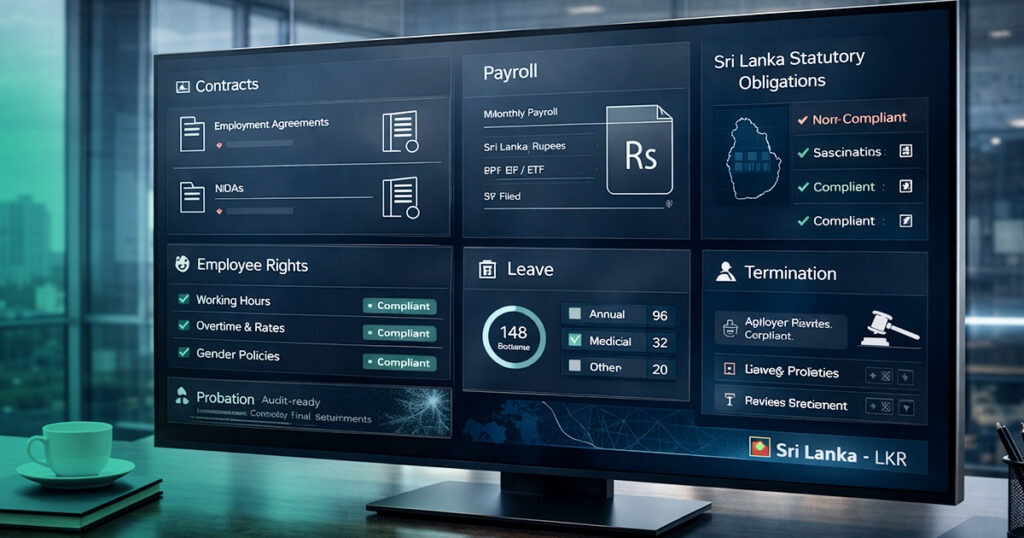
Employment Law in Sri Lanka: What Foreign Employers Must Get Right Expanding into Sri Lanka provides access to skilled professionals, competitive operating costs, and strong sector depth across technology, finance, and business services. However, foreign employers entering the market often underestimate one critical factor: employment law in Sri Lanka. The regulatory environment is structured, enforceable, and protective of employees. Misalignment with Sri Lankan employment regulations can create financial exposure, operational disruption, and reputational risk. Before building teams locally, foreign companies must clearly understand the employment laws applicable in Sri Lanka and how these laws shape their obligations as employers. What Employment Laws Apply in Sri Lanka? Several statutory frameworks govern employment relationships in Sri Lanka. Core labour regulations in Sri Lanka include: The Shop and Office Employees Act The Wages Board Ordinance The Termination of Employment of Workmen Act Employees’ Provident Fund and Employees’ Trust Fund legislation Gratuity laws in Sri Lanka Occupational safety and workplace compliance requirements These Sri Lankan employment regulations apply to both local and foreign employers operating within the country. Foreign companies cannot rely on employment practices from their home jurisdiction. Local labour regulations take precedence for employees based in Sri Lanka. Organisations evaluating market entry models should review Setting Up a Company in Sri Lanka vs Using an Extended Office Model before committing to a structure that may not suit early-stage operations. How Does Sri Lanka’s Labour Law Affect Foreign Companies? Sri Lanka’s labour law directly affects foreign companies in several significant ways. Statutory Contributions Employers must register for and contribute to EPF and ETF schemes in accordance with Sri Lankan employment regulations. These contributions are mandatory and closely monitored. Termination Restrictions Termination laws in Sri Lanka are structured and protective. In certain employment categories, approval from the Sri Lanka Labour Department may be required before termination. Employers must follow lawful disciplinary procedures and maintain proper documentation. Mandatory Employment Conditions Working hours, leave entitlements, probation period regulations, and wage protections are clearly defined under labour regulations in Sri Lanka. Foreign employers unfamiliar with HR compliance in Sri Lanka often assume greater flexibility than the law permits. Understanding employer obligations in Sri Lanka is fundamental to responsible expansion. Where hiring volumes are expected to increase, compliance must scale alongside recruitment strategy. Structured support, such as Recruitment & Talent Solutions in Sri Lanka ensures that hiring and legal compliance evolve together. HR Compliance in Sri Lanka: Core Employer Obligations HR compliance in Sri Lanka extends well beyond issuing an employment contract. Foreign employers must ensure: Written contracts aligned with Sri Lankan employment regulations Proper statutory registration Accurate payroll calculations and statutory deductions Protection of employee rights in Sri Lanka Clearly defined disciplinary procedures Documentation aligned with labour regulations Workplace compliance in Sri Lanka requires administrative discipline and effective governance oversight. Failure to maintain compliance may trigger review by the Sri Lanka Labour Department. Organisations developing their hiring framework may also benefit from reviewing The Hiring Mistakes Foreign Companies Make in Sri Lanka, particularly where workforce design and governance systems are still evolving. Termination Laws in Sri Lanka Termination laws in Sri Lanka are frequently misunderstood by foreign employers. Under the Termination of Employment of Workmen Act, certain dismissals require: Justifiable cause Documented disciplinary procedures Compliance with statutory notice requirements In some cases, approval from the Sri Lanka Labour Department Redundancy, misconduct, and performance-based dismissals must follow established legal processes. Foreign companies accustomed to at-will employment models must adjust expectations accordingly. Businesses expanding under a managed operational structure often explore Extended Office Solutions in Sri Lanka to ensure HR, finance, and compliance oversight remain integrated. Probation Period Regulations Probation period regulations in Sri Lanka must be clearly documented within employment contracts. While probation enables employers to assess suitability, it does not remove employer obligations under broader Sri Lanka employment regulations. Improper handling of probation termination may expose employers to legal challenge. Structured documentation and lawful procedure remain essential. Gratuity Laws in Sri Lanka Gratuity laws in Sri Lanka require employers to provide lump sum payments to eligible employees who complete a qualifying period of service. Foreign employers frequently overlook gratuity obligations when modelling workforce costs. Gratuity liabilities must be incorporated into long-term financial planning. Ignoring gratuity laws in Sri Lanka can create future financial strain that affects operational stability. Employee Rights in Sri Lanka Employee rights in Sri Lanka are reinforced through statutory leave entitlements, maternity protections, regulated working hours, and wage safeguards. Employers must ensure: Compliance with regulated working hours Overtime payments where applicable Leave management aligned with statutory entitlements Non-discriminatory workplace practices Workplace compliance in Sri Lanka includes safeguarding employee rights while maintaining structured operational oversight. Disciplinary Procedures and Documentation Disciplinary procedures must follow clear and documented processes. This includes: Written warnings Providing the employee with an opportunity to respond Investigation records Proportionate corrective measures Failure to implement lawful disciplinary procedures weakens an employer’s position in the event of a dispute. Foreign companies must align internal HR frameworks with Sri Lankan labour regulations rather than importing informal policies from other jurisdictions. What Are Employer Obligations in Sri Lanka? In summary, employer obligations in Sri Lanka include: Compliance with employment law in Sri Lanka Adherence to statutory contribution requirements Observance of termination laws in Sri Lanka Alignment with probation period regulations Fulfilment of gratuity laws in Sri Lanka Protection of employee rights in Sri Lanka Proper reporting and registration with the Sri Lanka Labour Department These obligations apply irrespective of company size or foreign ownership. Workplace Compliance in Sri Lanka Requires Structure Foreign employers often focus on recruitment strategy, salary competitiveness, and market entry timing. However, long-term operational stability depends upon disciplined HR compliance in Sri Lanka and adherence to labour regulations. Employment law in Sri Lanka is not designed to restrict business. It exists to regulate employment relationships responsibly. Companies that align early with Sri Lanka employment regulations scale with greater predictability. Those who rely on assumptions typically face corrective costs later. Understanding employment
Accounting and Finance Solutions for Offshore and Extended Teams in Sri Lanka

Accounting and Finance Solutions for Offshore and Extended Teams in Sri Lanka Finance problems rarely begin with the numbers. They begin in the structure As companies expand into Sri Lanka or manage offshore teams globally, accounting and finance are often treated as back-office functions. In reality, they are core operating controls. When finance systems are fragmented, leadership loses visibility, compliance risk increases, and decision-making slows. This is why structured accounting and finance solutions are essential for sustainable offshore operations. Why Accounting and Finance Become Complex in Offshore Operations Sri Lanka offers strong talent and cost advantages. However, offshore finance operations introduce complexity that many companies underestimate. Common challenges include: Disconnected payroll and accounting systems Delayed or inconsistent financial reporting Limited visibility into workforce costs Compliance gaps across tax and statutory filings Overreliance on manual processes These issues rarely surface immediately. They build quietly as headcount increases. By the time they are visible, they are already affecting cost control, compliance, and leadership confidence. What Effective Accounting and Finance Solutions Should Cover Strong accounting and finance solutions go beyond bookkeeping. They create a controlled financial environment that supports scale. Management Accounting and Reporting Timely, accurate reports that give leadership clear visibility into costs, margins, and operational performance. Payroll and Statutory Compliance Integrated payroll processing aligned with Sri Lankan tax regulations, EPF, ETF, and statutory reporting requirements. Financial Controls and Governance Defined approval structures, audit trails, and internal controls that reduce risk and improve accountability. Budgeting and Cost Forecasting Clear tracking of workforce and operational costs to support planning and informed decision-making. Audit and Regulatory Readiness Systems designed to withstand audits without disrupting operations. Without these foundations, offshore growth becomes reactive rather than structured. Accounting and Finance Risks Companies Commonly Miss Many companies prioritise hiring and delivery while assuming finance will catch up later. That assumption creates exposure. Typical risks include: Payroll errors that damage employee trust Inaccurate cost reporting leading to poor strategic decisions Non-compliance penalties due to missed statutory filings Delays during audits or due diligence processes Leadership blind spots around offshore spending Correcting these issues after scaling is significantly more expensive and disruptive than building the right structure from the start. How Integrated Finance Improves Offshore Team Performance Accounting and finance are not isolated functions. When integrated into daily operations, they directly influence performance. Clear reporting strengthens leadership confidence. Predictable payroll improves retention and morale. Accurate cost data supports smarter hiring and expansion decisions. For offshore and extended teams, finance integration is what turns presence into structured operations. This becomes even more critical when teams operate across borders, currencies, and regulatory environments. Accounting and Finance in an Extended Office Model In an extended office structure, accounting and finance solutions are embedded into the operating model rather than treated as external services. This typically includes: Centralisedpayroll and statutory compliance Integrated accounting aligned with global reporting standards Real-time visibility into workforce and operational costs Ongoing compliance monitoring rather than reactive corrections This approach reduces fragmentation and ensures finance enables growth instead of constraining it. When finance is designed as part of the operating system, scale becomes controlled rather than chaotic. When Companies Should Reassess Their Finance Structure It is time to review your accounting and finance structure when: Offshore headcount is increasing Financial reporting feels delayed or unreliable Compliance is handled reactively Leadership lacks visibility into key cost drivers Audits or restructuring create operational disruption These signals indicate that finance systems have not evolved alongside business growth. Ignoring them increases long-term risk. Take Control Before Finance Becomes a Liability If your offshore team is growing but your financial structure has not evolved with it, you are building risk into your operations. Do not wait for payroll errors, compliance penalties, or audit disruptions to expose structural gaps. Assess your finance model now. Envoy Ortus works with companies operating in Sri Lanka to design integrated accounting and finance systems that provide: Real-timecost visibility Structured payroll and statutory compliance Governance aligned with global standards Scalable financial controls built for growth If you are expanding, restructuring, or scaling offshore teams, the right time to fix your finance structure is before it fails under pressure. Speak with Envoy Ortus to review your current finance framework and build a system designed for long-term operational control and sustainable growth.
How to Fix Hiring Delays with Recruitment Process Outsourcing

How to Fix Hiring Delays with Recruitment Process Outsourcing Hiring delays are a system failure, not a people problem. When companies struggle to fill roles on time, the instinctive response is to blame talent shortages, slow candidates, or underperforming recruiters. In reality, most hiring delays are caused by broken recruitment systems. For organisations hiring in Sri Lanka or managing global teams, delays in recruitment directly affect delivery timelines, revenue, and team morale. The longer a role remains open, the higher the hidden cost. This is why many companies turn to Recruitment Process Outsourcing to reduce time to hire and regain control over their hiring pipeline. Why Time to Hire Keeps Increasing Time to hire rarely increases overnight. It degrades gradually as hiring demand grows and systems fail to keep up. Common causes include: Fragmented recruitment responsibilities Manual screening and shortlisting Poor coordination between HR and hiring managers Inconsistent interview processes Limited visibility into pipeline status These are not individual performance issues. They are structural weaknesses. When recruitment depends on ad hoc processes, delays become inevitable. What Recruitment Bottlenecks Look Like in Practice Recruitment bottlenecks often hide in plain sight. Roles move slowly between approval stages. CVs sit unreviewed because no one owns the screening process. Interview feedback takes days to return. Candidates drop out due to silence or uncertainty. Each delay seems minor on its own. Together, they extend hiring cycles by weeks. Without clear ownership and standardised workflows, recruitment becomes reactive rather than predictable. How Recruitment Process Outsourcing Reduces Time to Hire Recruitment Process Outsourcing addresses hiring delays by redesigning recruitment as a managed system. Instead of working role by role, an RPO model takes responsibility for the full hiring lifecycle. This creates consistency, accountability, and speed. Key ways RPO improves time to hire include: Centralisedownership One accountable team manages sourcing, screening, coordination, and reporting. This eliminates handover delays. Proactive talent pipelinesCandidates are sourced and nurtured continuously, reducing dependence on last-minute hiring. Standardisedscreening and interviews Clear evaluation criteria speed up decision-making and reduce back and forth. Real-time visibilityHiring managers gain insight into pipeline health, bottlenecks, and expected timelines. This turns recruitment into a controlled process rather than a recurring firefight. RPO Time to Hire vs Traditional Hiring Models Traditional recruitment models are reactive. They begin when a vacancy opens. RPO operates continuously. It anticipates hiring needs based on workforce planning and historical demand. As a result: Vacancies are filled faster Candidate quality improves Hiring managers spend less time coordinating HR teams regain focus on strategic priorities The improvement in time to hire is not accidental. It is designed into the system. Hiring Delay Solutions for Offshore and Remote Teams For offshore and remote teams in Sri Lanka, hiring delays carry additional risk. Project timelines depend heavily on headcount readiness. RPO is particularly effective in these environments because it aligns recruitment with operational delivery. Hiring plans are built around demand forecasts, not just approved requisitions. This ensures teams scale when the business needs them, not weeks later. For organisations combining offshore operations with extended office or compliance led models, RPO integrates seamlessly into broader workforce structures. When RPO Makes the Biggest Impact Recruitment Process Outsourcing delivers the strongest results when: Hiring volumes are consistent or growing Time to hire is directly affecting delivery or revenue Internal HR teams are overloaded Leadership lacks visibility into recruitment performance Offshore or multi-role hiring is ongoing In these scenarios, fixing individual delays is ineffective. The system itself must change. Reducing time to hire is not about making recruiters work harder. It is about designing recruitment to work better. Hiring delays are a symptom of unmanaged processes, unclear ownership, and fragmented execution. Recruitment Process Outsourcing addresses these root causes by turning hiring into a structured, measurable operation. For companies hiring in Sri Lanka or managing global teams, working with an experienced operating partner such as Envoy Ortus helps ensure recruitment speed, quality, and compliance scale together.
The Tech-Enabled Side of Sri Lanka’s BPO Industry – A Look Inside Envoy Ortus’ Operations

The Tech-Enabled Side of Sri Lanka’s BPO Industry – A Look Inside Envoy Ortus’ Operations Why Technology Is Powering the Future of BPO in Sri Lanka Sri Lanka’s BPO industry has undergone a fundamental transformation. Once recognised primarily for affordability, it is now gaining global attention for its ability to deliver intelligent, secure, and technology-driven operations. At the forefront of this shift is Envoy Ortus. By combining skilled people, structured processes, and advanced technology, Envoy Ortus delivers BPO solutions that meet modern enterprise expectations. This article offers a behind-the-scenes look at the tech-enabled engine that powers Envoy Ortus, from AI and automation to secure digital workflows that drive consistency, performance, and scale. The New Face of BPO in Sri Lanka: Powered by Technology Modern BPO in Sri Lanka is no longer defined by manpower alone. Today, it is driven by automation, real-time data, and intelligent infrastructure. At Envoy Ortus, technology strengthens every function across the BPO lifecycle, including: Customer support Back-office operations Finance and accounting IT helpdesk services Content moderation and data processing Cloud platforms, AI-assisted tools, and enterprise-grade systems ensure each operation meets global standards for speed, accuracy, and security. Inside the Tech Stack – How Envoy Ortus Delivers Smart BPO Solutions Customer Relationship Management (CRM) Systems CRMs sit at the core of responsive and consistent BPO delivery. Envoy Ortus integrates seamlessly with leading enterprise-grade CRM platforms to create a single, unified view of every customer. By centralising customer data and interaction history, these systems enable agents to respond faster, understand context instantly, and maintain uninterrupted service across all channels. The result is smoother handovers, higher accuracy, and a consistently reliable customer experience. AI and Automation for Operational Efficiency Artificial intelligence is embedded across workflows to enhance precision and reduce manual overhead. Key applications include: AI-powered chatbots for Tier-1 support Sentiment analysis to understand customer intent and emotion Intelligent ticket routing based on urgency and capacity Automated data entry and reporting workflows This approach improves response times while allowing human agents to focus on complex, high-value interactions. Cloud Collaboration for Seamless Workflow Management Distributed teams depend on reliable collaboration. Envoy Ortus uses secure, enterprise-grade tools such as: Google Workspace Microsoft 365 Slack and Microsoft Teams Project management platforms like Asana and Trello These tools enable real-time coordination, document sharing, and cross-functional communication across global time zones. Security-First Operations: How Envoy Ortus Protects Client Data Data security is non-negotiable in modern BPO. Envoy Ortus operates on a security-first framework that includes: End-to-end encryption Role-based access controls Multi-factor authentication Secure VPN access for remote work Regular audits aligned with international standards This ensures confidentiality, system integrity, and uptime, making Sri Lanka a viable destination for even the most security-sensitive industries. Real-Time Analytics and Performance Visibility Transparency is a cornerstone of strong outsourcing partnerships. Envoy Ortus provides custom dashboards and reporting tools that deliver: Live agent performance metrics Queue and workload visibility Average handle time tracking SLA compliance monitoring CSAT and NPS trend analysis With real-time insights, clients stay informed, proactive, and in control. Smart Onboarding and Continuous Training Through Technology Performance starts with preparation. Envoy Ortus uses digital training systems powered by: Learning Management Systems Role-based simulations Microlearning modules Gamification to drive engagement Continuous learning ensures teams stay aligned with tools, tone, and client expectations, reducing ramp-up time and sustaining long-term performance. AI Plus Human Intelligence: A Better CX Model Envoy Ortus does not use technology to replace people. It uses technology to amplify human capability. This balance delivers: Faster first response times Context-aware, personalised interactions Higher customer satisfaction Improved agent productivity and morale The result is a scalable CX model that feels human, responsive, and consistent across markets. Why Global Clients Trust Sri Lanka for Tech-Driven BPO Sri Lanka’s rise as a BPO innovation hub is driven by: A tech-literate, English-speaking workforce National investment in digital and ICT infrastructure Competitive cost structures with high service quality Time zone alignment that supports global operations When combined with Envoy Ortus’ technology stack and delivery model, Sri Lanka offers global companies a reliable and future-ready BPO destination. Conclusion: The Digital Advantage Behind Envoy Ortus’ BPO Operations The future of BPO is intelligent, secure, and data-driven. Envoy Ortus sets this standard in Sri Lanka by combining advanced CRMs, AI-enabled workflows, cloud collaboration, and enterprise-grade security. For businesses seeking to outsource smarter rather than cheaper, Envoy Ortus delivers a tech-forward BPO model built for scale, transparency, and control.
Internal Audit & Risk Advisory

Why Internal Audit & Risk Advisory Are Critical for Modern Business Stability In today’s dynamic business environment, companies face increasing operational, financial, and compliance risks. Strengthening internal controls and risk governance is essential for business resilience and long-term sustainability. Envoy Ortus provides internal audit and risk advisory services that ensure your business remains compliant, secure, and well-governed. Why Internal Audits Matter Internal audits help businesses: Detect and prevent fraud Strengthen internal processes Improve financial accuracy Ensure regulatory compliance Reduce operational risks Improve organizational transparency Core Areas of Risk Advisory 1. Operational Risk Assessment Evaluating business processes to identify gaps and inefficiencies. 2. Financial Risk Management Ensuring accuracy, accountability, and control over financial operations. 3. Compliance & Regulatory Audits Keeping the business aligned with regional and international standards. 4. IT Systems & Cybersecurity Audit Assessing digital vulnerabilities and system reliability. How Envoy Ortus Supports Governance Independent audit services Comprehensive risk assessment Gap analysis and recommendations Policy reviews and compliance framework setup Continuous monitoring and advisory support Internal auditing is a vital pillar of corporate governance. With Envoy Ortus, businesses gain clarity, compliance, and confidence. What is the purpose of internal auditing?To evaluate internal processes, ensure compliance, reduce risk, and strengthen governance.
Digital Transformation & Automation in BPO

How Digital Transformation and Automation Are Redefining the BPO Industry The BPO industry is undergoing a massive shift driven by digital transformation, automation, AI, analytics, and cloud technologies. Organizations worldwide depend on BPO partners not just for cost reduction — but for innovation, speed, and enhanced customer experience. Envoy Ortus supports businesses through next-gen outsourcing solutions designed to automate processes, improve accuracy, and increase efficiency. Why Digital Transformation Matters in BPO Digital transformation helps businesses: Reduce manual work Accelerate turnaround time Improve accuracy and consistency Deliver better customer experiences Scale operations with lower operational costs Gain real-time visibility through analytics Key Automation Trends in BPO Robotic Process Automation (RPA)Routine, repetitive tasks can now be executed 10x faster with zero errors through RPA. Artificial Intelligence (AI) & Machine Learning (ML)AI-driven chatbots, prediction models, and automated workflows are shaping the future of support services. Cloud-Based OutsourcingCloud platforms enable seamless collaboration, data sharing, and remote workforce management. Data Analytics & Business IntelligenceBPOs now provide strategic insights that help businesses make informed decisions. Workflow AutomationDigital workflows reduce bottlenecks and enhance efficiency across HR, finance, IT, and customer service. How Envoy Ortus Drives Digital Transformation Implementing automation for finance, HR, and admin functions Enabling cloud-based remote operations Leveraging data and analytics for process optimization Providing scalable digital workplaces Integrating tools for workflow and performance management Digital transformation is no longer optional — it’s a competitive necessity. Envoy Ortus helps businesses transition into fully optimized, automated, and digitally driven operations. What is the biggest benefit of automation in BPO?Automation boosts speed, reduces errors, and lowers operational costs, allowing businesses to scale faster.